
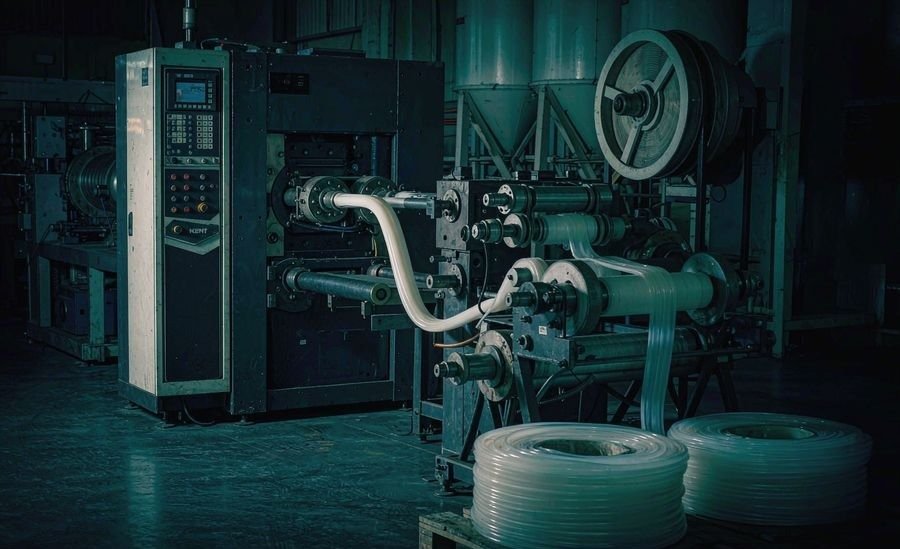
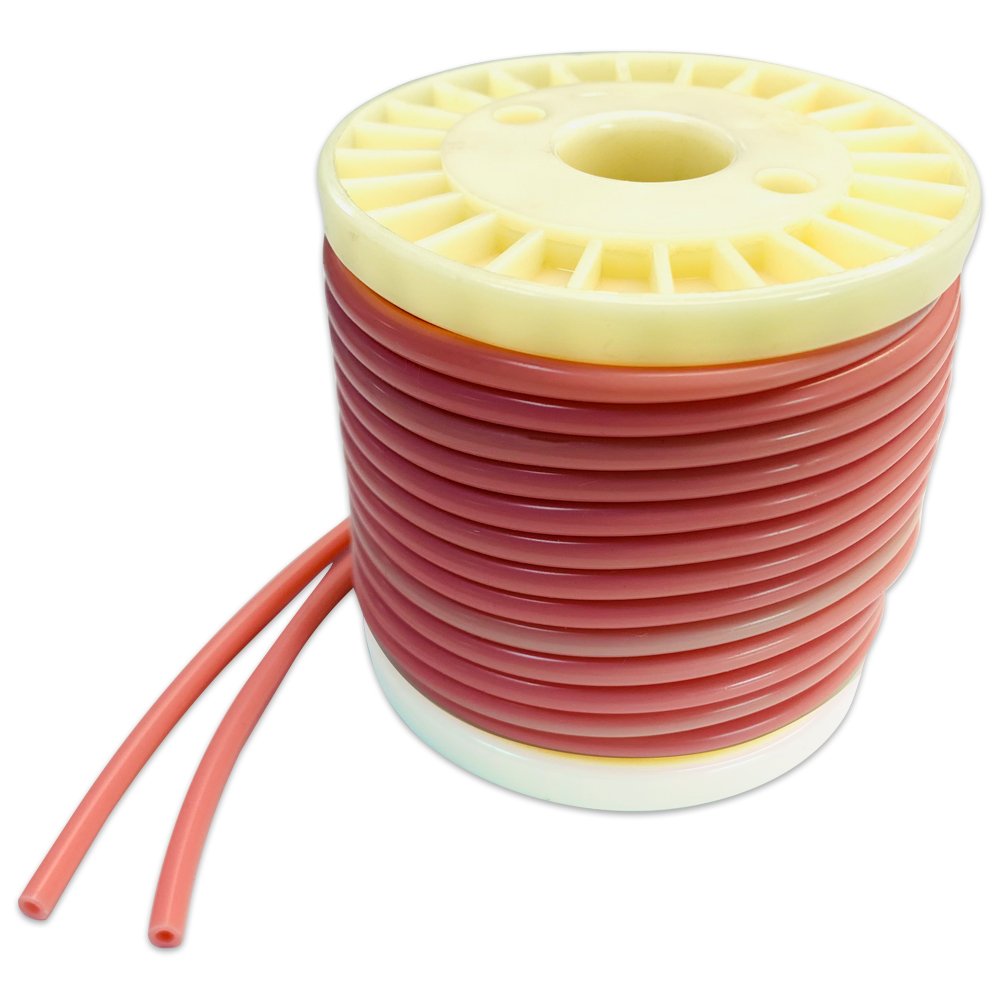
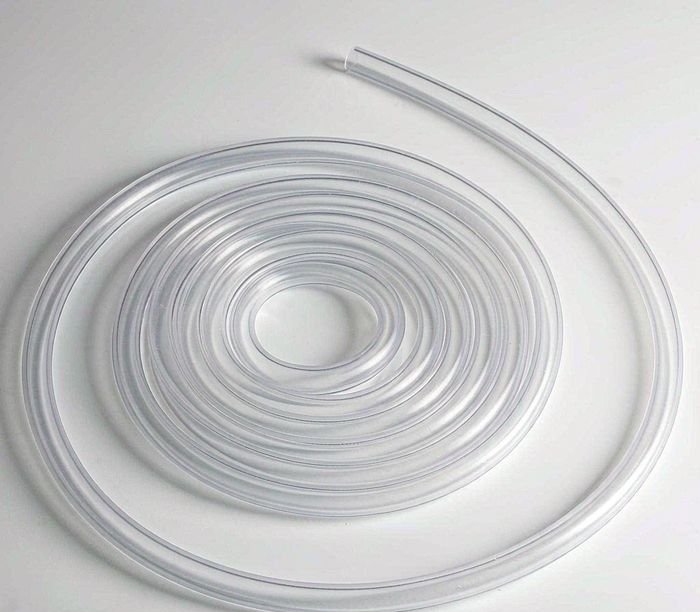
Two tubes, same ID, same wall, 12% different flow rate. The variable was hardness — and it is usually the last thing specified.
In a peristaltic pump the tube is the pump chamber. It has to collapse fully, then recover fully, thousands of times an hour. A harder tube resists collapse and gives up stroke volume; a softer tube recovers slower and starts to creep.
| Shore A | Flow vs 50A baseline | Tube life | Typical use |
|---|---|---|---|
| 40A | +6 to +9%% | Shorter, wall thins over time | Shear-sensitive fluids |
| 50A | Baseline | Balanced | General metering |
| 60A | +3 to +5%% | Longer | Higher pressure, viscous media |
| 70A | -4 to -7%% | Longest | Pressure lines, low pulsation need |
The counter-intuitive part is the middle of the curve. Going softer increases stroke volume but loses it again to creep; going harder keeps shape but sacrifices fill. 50–60 A is the plateau for a reason.
Both are silicone rubber, and on a drawing they look identical. The cure system decides what leaches out of the …
28 Oct 2026 · 7 min read
ID, wall and concentricity are three separate promises. Confusing them is the most common reason a tube that &ld…
21 Oct 2026 · 8 min read
Three names that get used interchangeably in quotation emails, and three completely different tests. Here is wha…
14 Oct 2026 · 9 min read
Send a drawing or a sample. We will tell you which compound and hardness we would run, and what it costs at your volume.