
High temperature silicone tubing
that stays flexible at 230 °C
Red and white compounds rated for 230 °C continuous and 250 °C peaks, with compression set and elongation data after ageing so you know what is left at end of life.
Silicone does not melt at 230 °C.
It slowly stops being rubber.
The useful question is not the maximum temperature on a datasheet. It is how much elongation and compression set survive after 1 000 hours at the temperature you actually run. A standard VMQ loses roughly half its elongation over that period at 200 °C; a heat-stabilised compound with the right filler holds considerably more.
So we quote two numbers: the continuous rating, and the retained properties after ageing at that rating. If your duty is a short peak rather than a steady soak, say so, because the compound for a 250 °C one-hour event is not the same as the one for 200 °C continuous.
Four ways to specify it
Same compound family, different construction. Mixing two options on one order is common and usually cheaper than splitting the purchase.
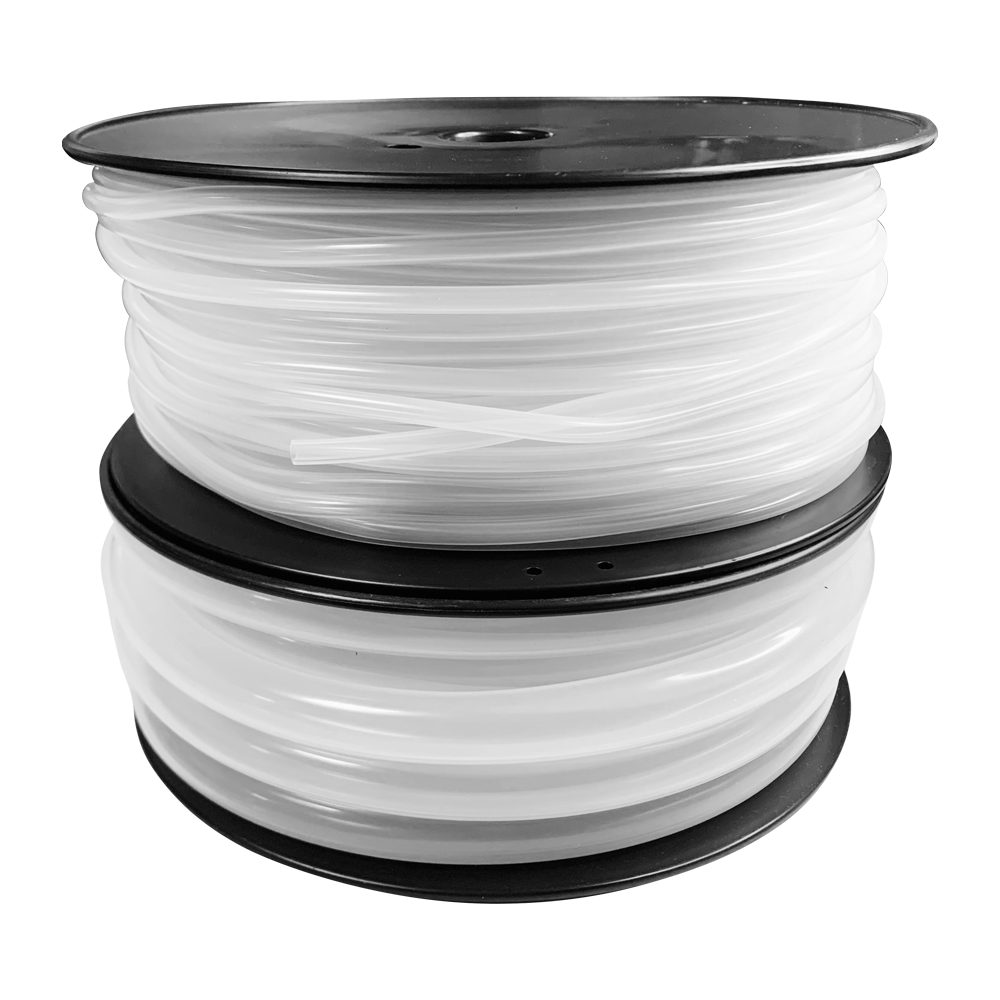
Standard High-Temp
Red compound, general heat duty
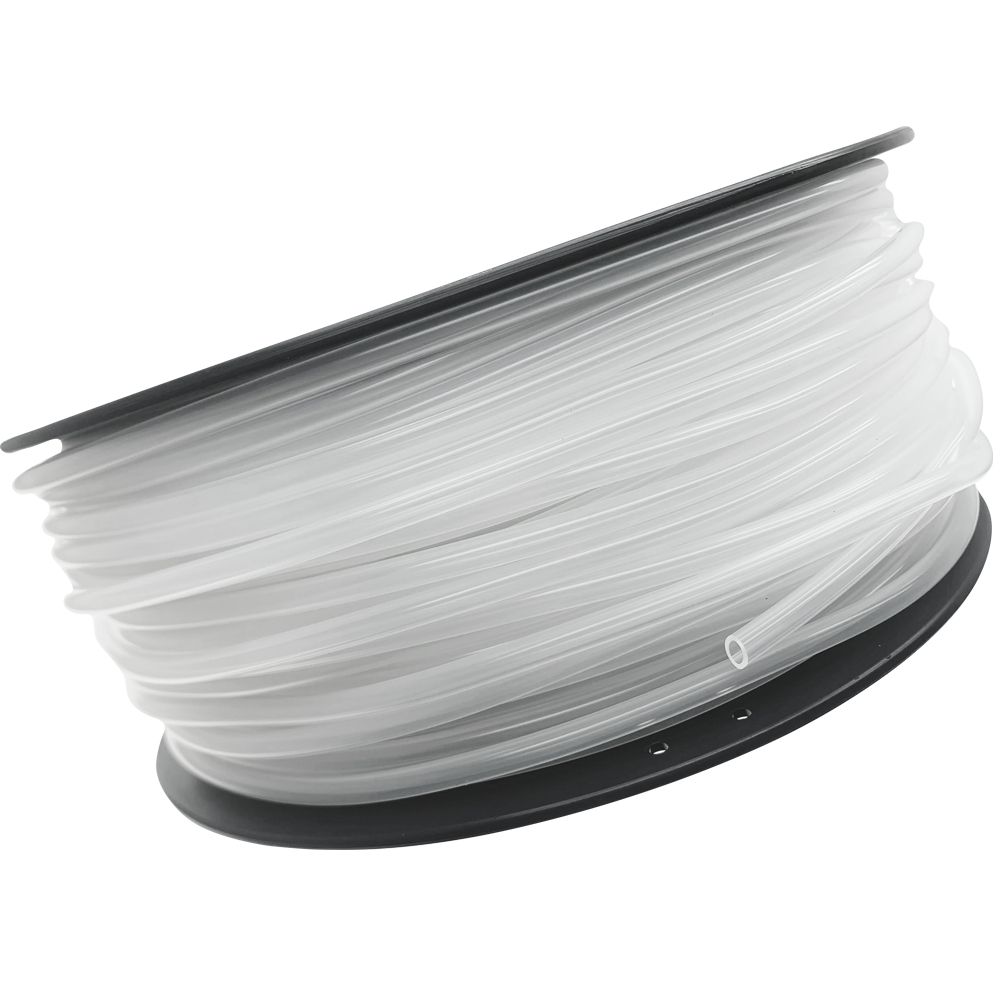
White High-Temp
Clean-room and food-friendly heat tubing
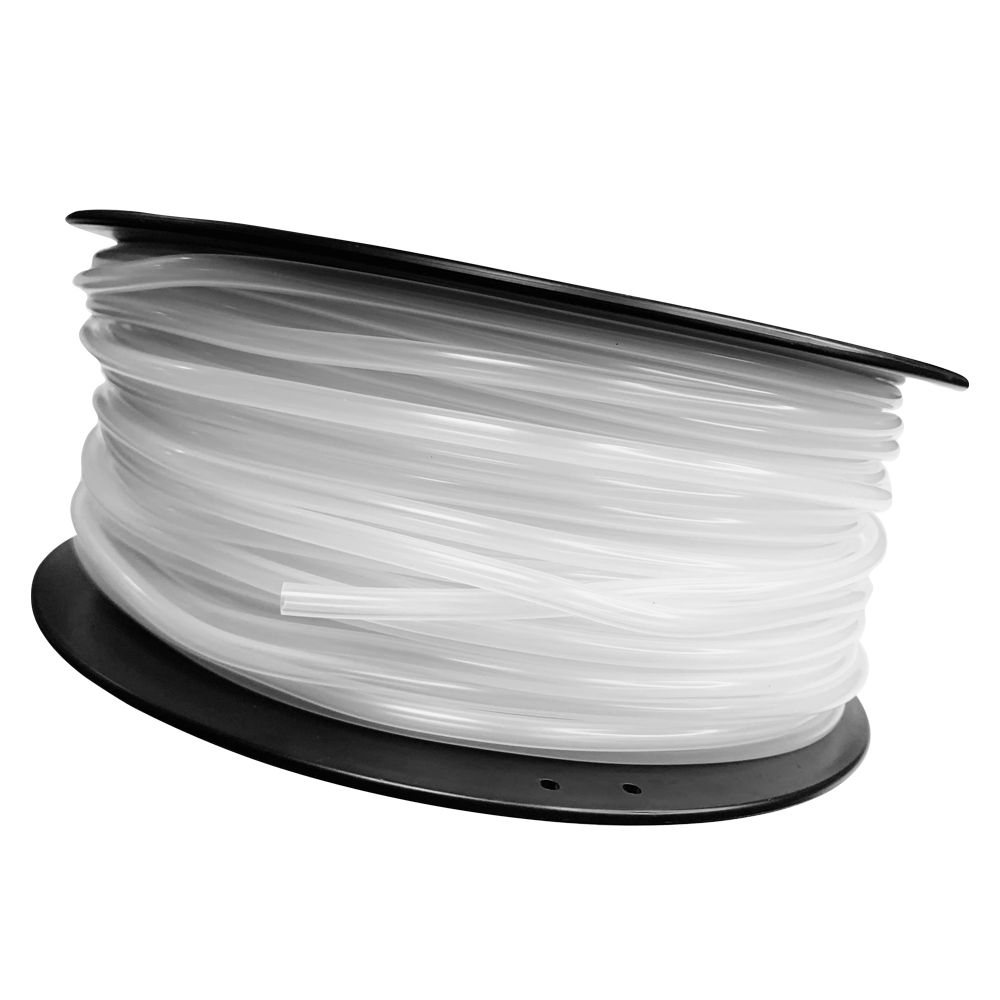
Fibre-Sleeved Hose
Radiant heat and abrasion protection
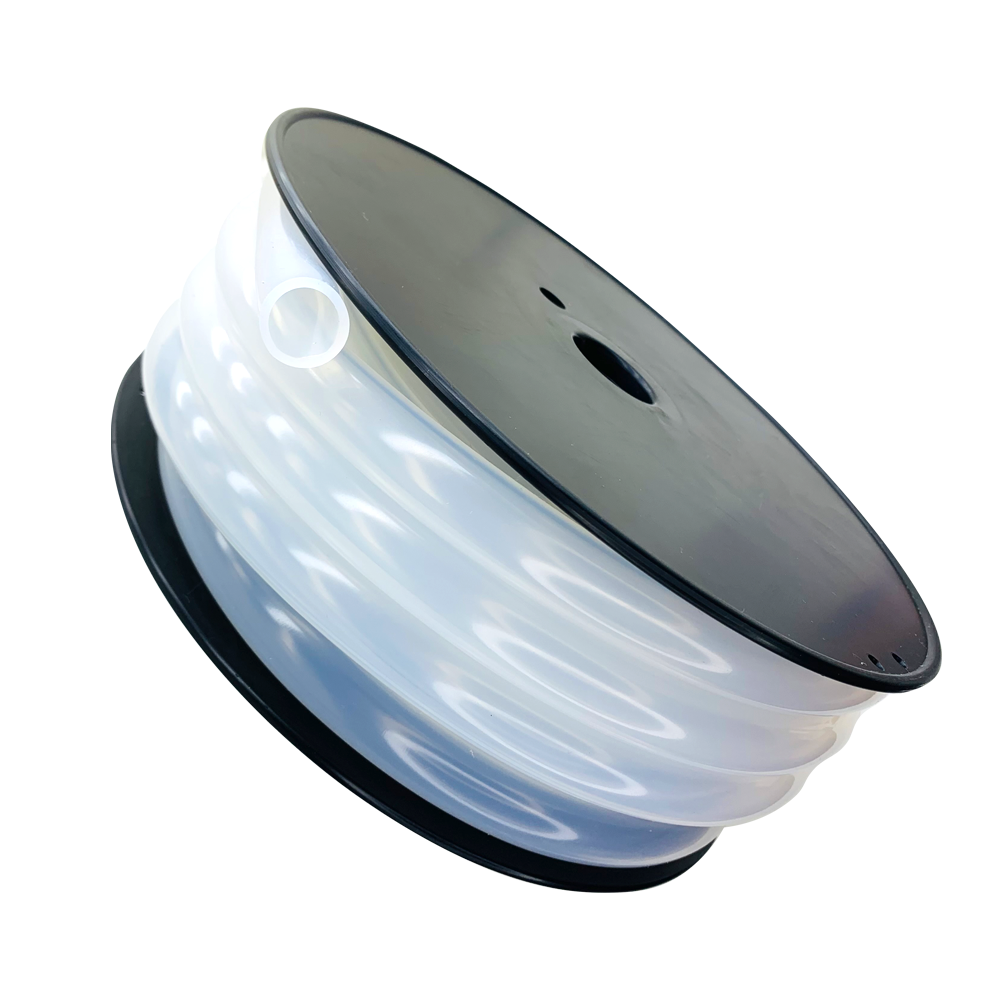
Flame-Retardant Tubing
UL 94 V-0 for enclosed equipment
Applications this line is specified into
Engine & exhaust bay
Charge-air and coolant lines near a hot manifold.
Ovens & furnaces
Door seals and vent lines at 220 °C continuous.
LED & lighting
Sleeving next to the heat sink, not just at the LED.
Hot air & blowers
Duct connections that must stay flexible.
3D printing
Hot-end and chamber tubing with repeated heat cycles.
Hot fill & steam
Steam injection and hot-fill lines with a white compound.
Bore, wall and retained properties
Retention figures are from 1 000 h air ageing at the stated temperature, tested to ISO 188. They describe the tube at end of life, not at day one.
| ID (mm) | OD (mm) | Wall (mm) | Rating (°C) | Elong. retained | Set (%) |
|---|---|---|---|---|---|
| 3 | 6 | 1.5 | 230 | 72 % | 22 |
| 4 | 7 | 1.5 | 230 | 72 % | 22 |
| 6 | 10 | 2.0 | 230 | 70 % | 24 |
| 8 | 13 | 2.5 | 230 | 70 % | 24 |
| 10 | 16 | 3.0 | 230 | 68 % | 26 |
| 13 | 20 | 3.5 | 230 | 68 % | 26 |
| 16 | 24 | 4.0 | 230 | 65 % | 28 |
| 19 | 27 | 4.0 | 230 | 65 % | 28 |
| 25 | 35 | 5.0 | 230 | 60 % | 30 |
Questions engineers ask first
230 °C continuous or 200 °C?
Does the tube go brittle or soft with age?
Is the red colour functional or cosmetic?
Do I need the fibre sleeve?
Can you supply UL 94 V-0?
Tell us the real temperature profile.
Steady soak, cyclic, or a short peak? Each points to a different compound. Send the profile and the failure you have seen before, and we will quote the tube plus the ageing data behind the rating.
sales16@yutiansilicone.com
+86 136 6281 5387
Free samples from existing tooling · reply within 24 h