
Peristaltic pump tubing
that holds its flow rate
The tube is the pump. Bore tolerance, wall recovery and compression set decide whether the dose stays inside spec at 10 000 revolutions or drifts from the first hour.
Flow drift is a wall problem,
not a pump problem.
A peristaltic pump delivers volume by squeezing a tube flat and letting it spring back. Every revolution costs the tube a little of that spring. When the wall stops recovering fully, the flow drops before the tube visibly fails, and the drift is silent: nobody notices until an assay comes back low or a fill weight falls out of tolerance.
Three variables control that. Compression set, which is a property of the compound and its cure. Bore tolerance, because a 0.1 mm error on a 1 mm bore is a 10 % error in cross section and therefore in dose. And wall thickness, which sets how much the tube is deformed at a given occlusion gap. We hold bore to ±0.05 mm on sizes below 4 mm and supply compression set data with each lot.
Four ways to specify it
Same compound family, different construction. Mixing two options on one order is common and usually cheaper than splitting the purchase.
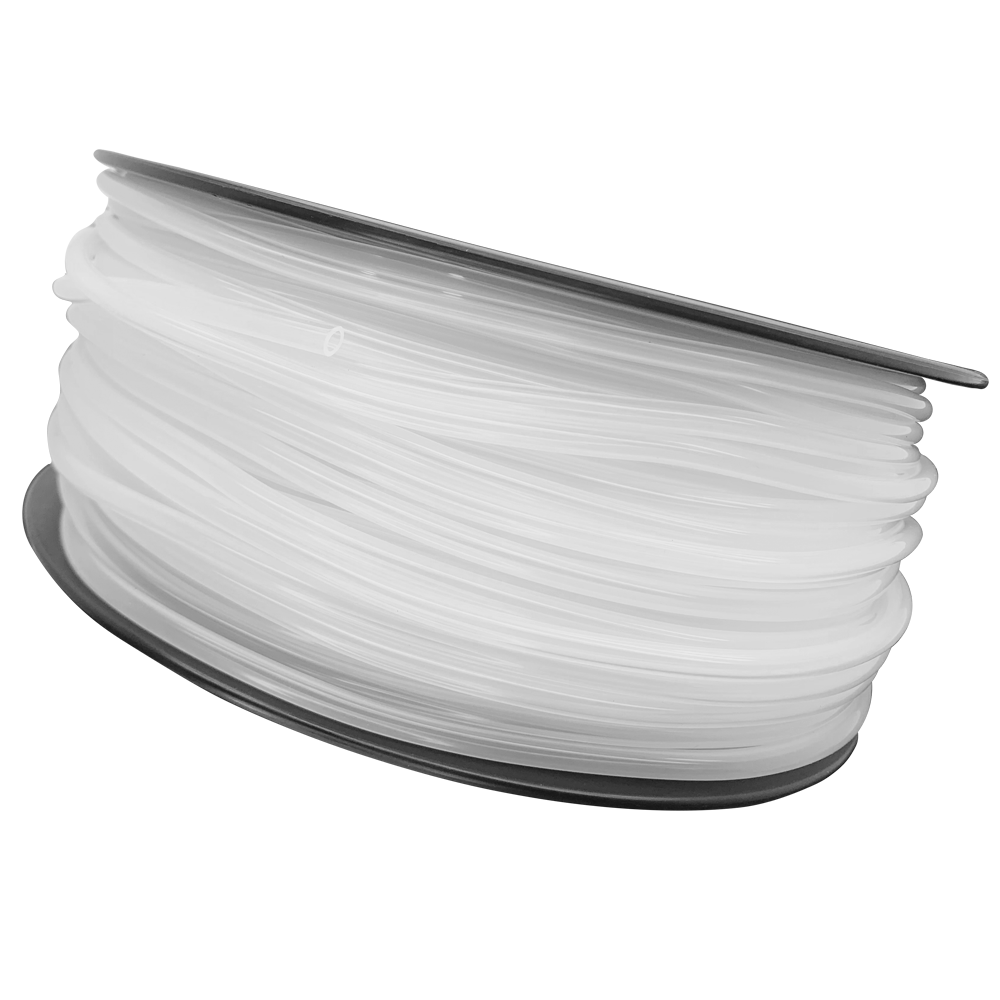
Standard Pump Tubing
General dosing and transfer duty
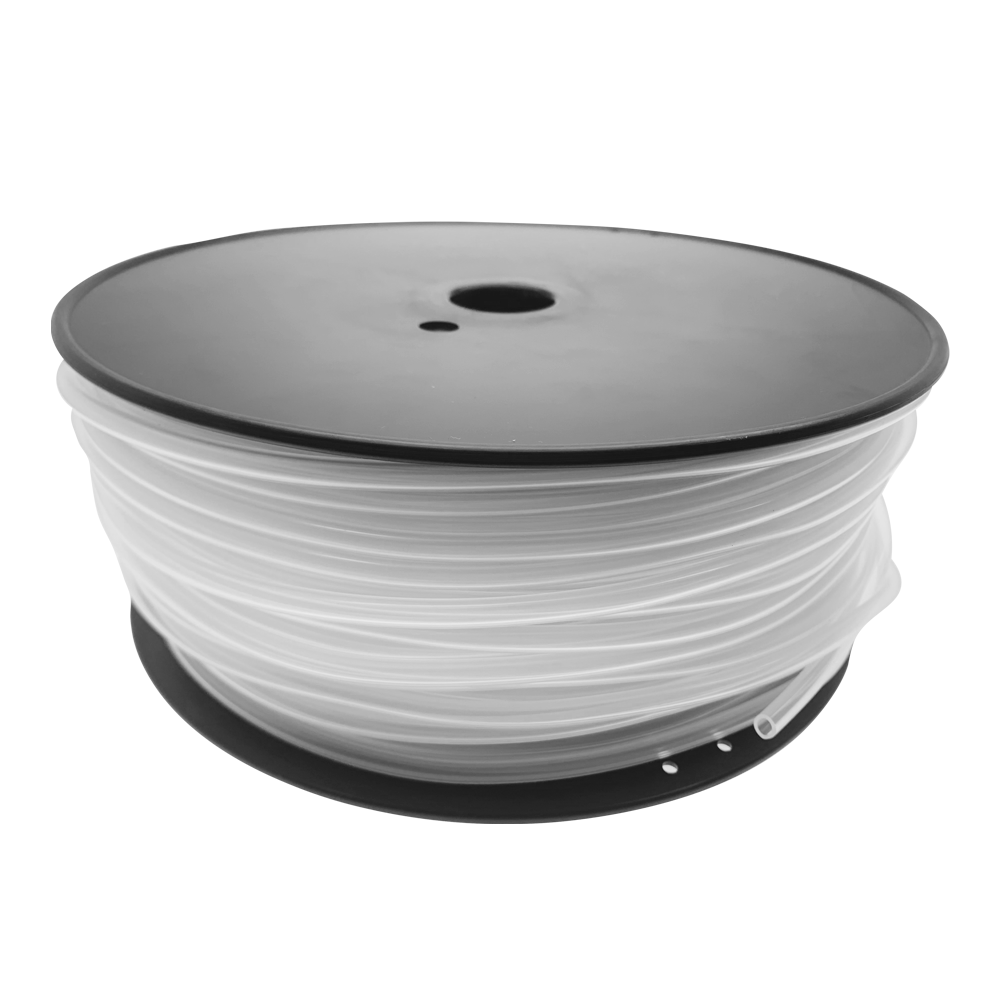
Long-Life Pump Tubing
High resilience compound for continuous running
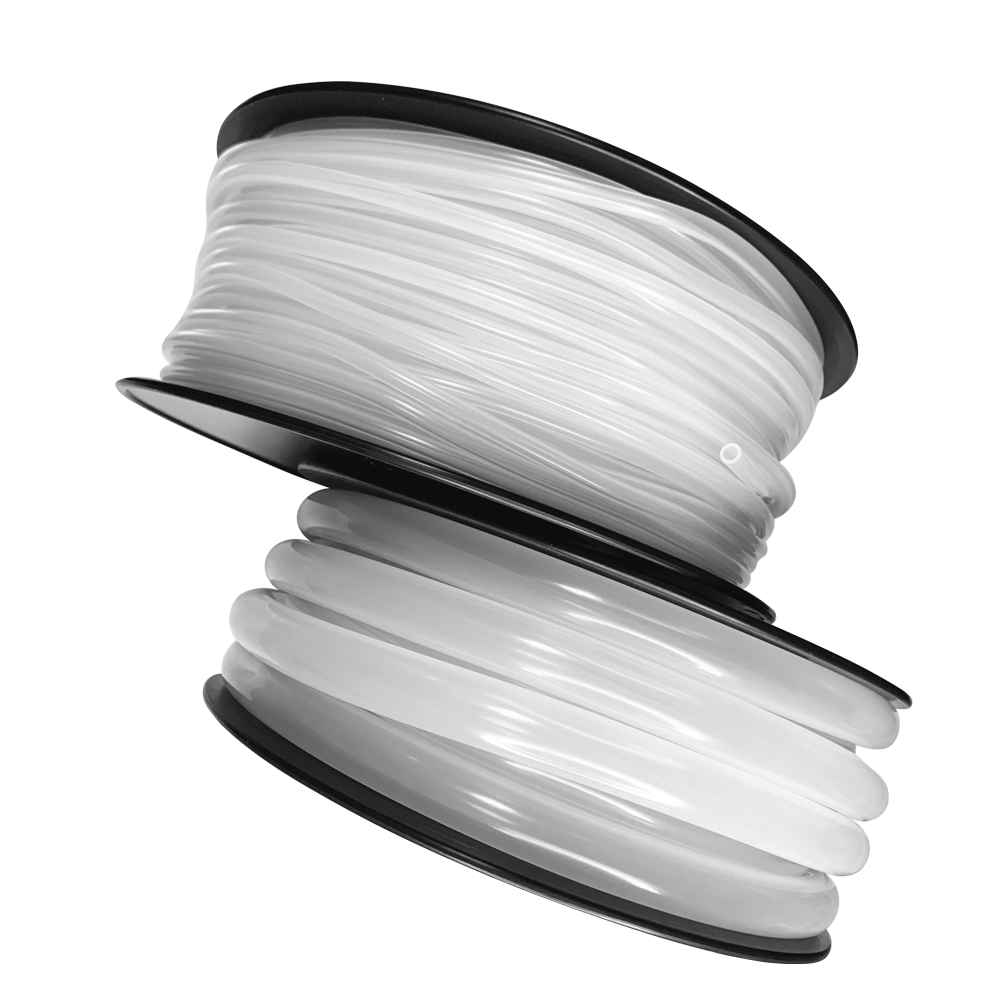
High-Pressure Pump Tubing
Thick wall for viscous product and back pressure
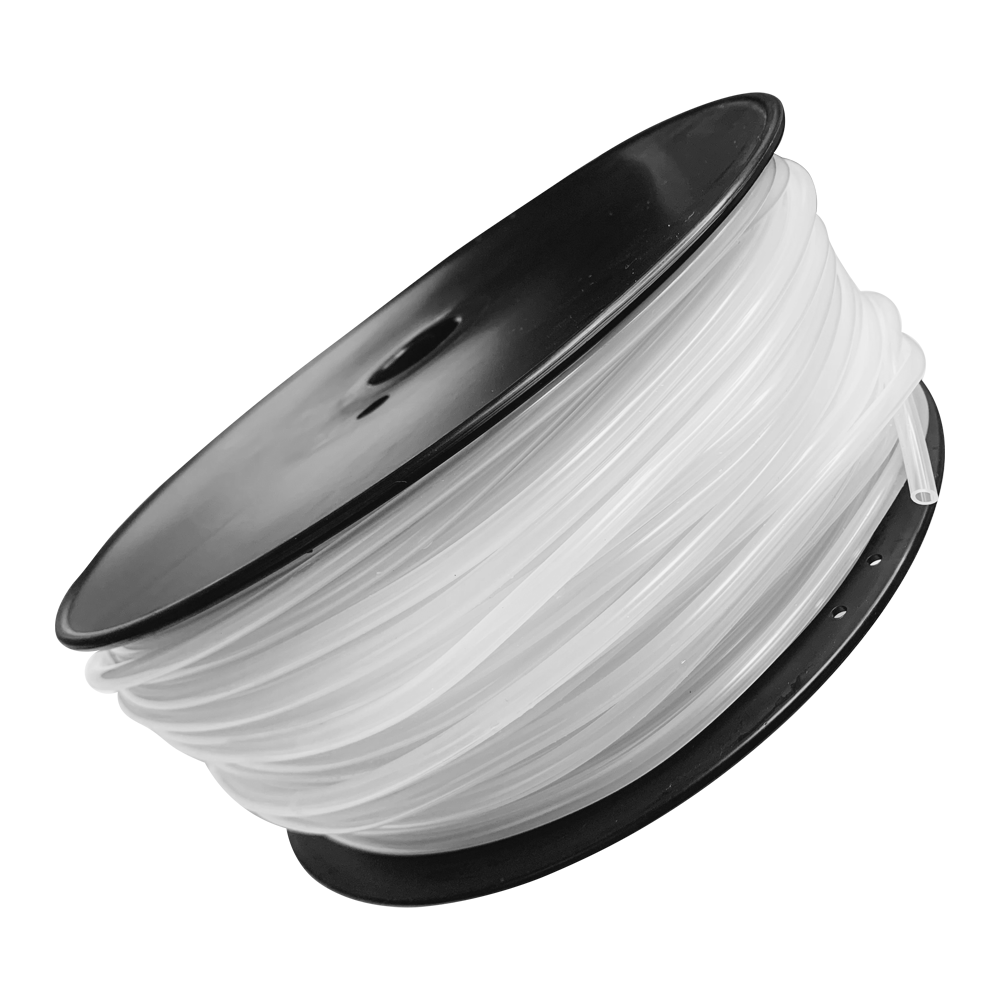
Micro Bore Dosing
Fine bore for reagent and sample handling
Applications this line is specified into
Laboratory dosing
Reagent and sample transfer where the dose is the measurement.
IV & infusion pumps
Dose accuracy over a 24 h infusion run.
Water & wastewater analysis
Continuous sampling with chemical resistance.
Food & beverage dosing
Flavour, colour and syrup injection at fill heads.
Ink & adhesive transfer
Viscous product through a thick-wall tube.
Bioprocess & single-use
Peristaltic feed lines on disposable bioreactors.
Bore, wall and expected life
Life figures are from a continuous run at 300 rpm against a 2-roller head with a correctly set occlusion gap. Your pump geometry will shift them; treat them as a comparison, not a guarantee.
| ID (mm) | Wall (mm) | OD (mm) | Tol. (mm) | Flow / rev (mL) | Life (h) |
|---|---|---|---|---|---|
| 0.5 | 1.6 | 3.7 | ±0.05 | 0.02 | 400 |
| 1.0 | 1.6 | 4.2 | ±0.05 | 0.07 | 450 |
| 1.6 | 1.6 | 4.8 | ±0.05 | 0.18 | 500 |
| 2.4 | 1.6 | 5.6 | ±0.08 | 0.40 | 520 |
| 3.2 | 1.6 | 6.4 | ±0.08 | 0.72 | 500 |
| 4.8 | 2.4 | 9.6 | ±0.10 | 1.60 | 480 |
| 6.4 | 2.4 | 11.2 | ±0.10 | 2.85 | 460 |
| 8.0 | 2.4 | 12.8 | ±0.12 | 4.45 | 440 |
| 9.5 | 3.2 | 15.9 | ±0.12 | 6.30 | 420 |
Questions engineers ask first
How many hours will a tube last?
Which wall thickness should I order?
Can it replace the branded tubing we use now?
How consistent is the bore from lot to lot?
Is it food or medical approved?
Tell us the pump and the dose tolerance.
Pump model, occlusion gap, product viscosity and the flow error you can accept. We come back with a bore and wall recommendation, a life estimate and a 2 m sample to run on your own head.
sales16@yutiansilicone.com
+86 136 6281 5387
Free samples from existing tooling · reply within 24 h